

Rhoduline Violet
Description
Functionally, this compound is used as a dye/biochemical reagent — for example as a staining agent or pH indicator in laboratories, as indicated by industrial suppliers listing it among “biological stains, pH indicators, laboratory reagents.” It’s also used under the name Diethyl Safranine / Methyl Diethyl Safranine for applications requiring a phenazinium‑type dye. Because dyes like this often interact with biological/or chemical substrates, handling typically requires caution, though explicit hazard classification details are less consistently reported in public sources for this specific compound.
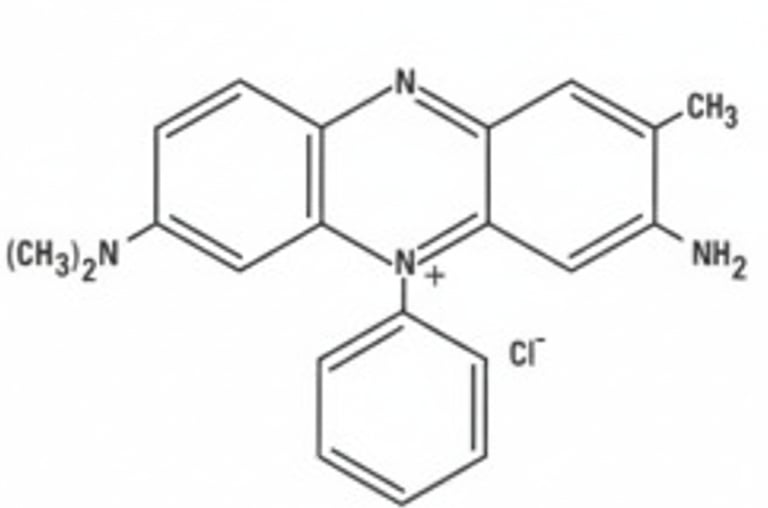
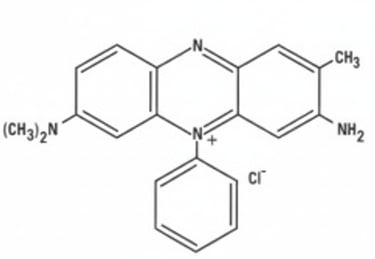
Structure of Rhoduline Violet
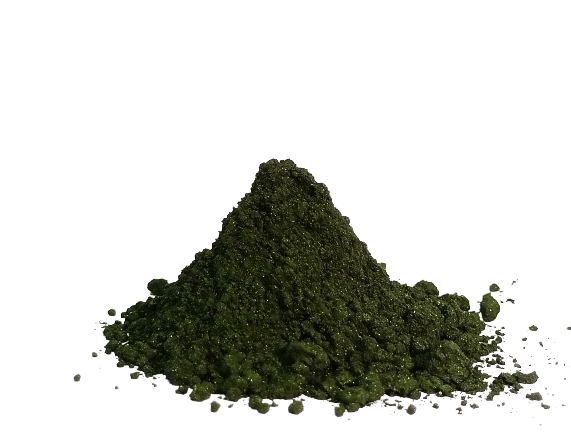
Appearance of Pheno safranin
Molecular Formula
CAS No.
CI No.
IUPAC Name
Molecular Weight
Appearance
Solubility
Dye Content
(Spectrophotometry)
C₂₁H₂₁N₄Cl
16508‑73‑9
50215
8‑N,8‑N,3‑trimeth yl-10- phenylphenazin- 10- ium-2,8- diamine, chloride
364.87 g/mol
greenish‑brown powder
Soluble in water
98%
Uses
Packing
Export Worthy packing.
Storage Conditions
Store in room temperature
Synonyms
3‑amino-7- (dimethylamino)-2 -methyl-5- phenyl phenazinim chloride
Biological stains & laboratory reagents / pH indicators — Many suppliers list Rhoduline Violet under “Biological Stains, pH Indicators and Laboratory Reagents.Write your text here...
Textile and paper dyeing / colourant for fabrics & paper — According to a chemical‑database listing, Rhoduline Violet is commonly used as a dye for fabrics and paper providing a “gorgeous purplish‑red” hue
Electroplating / metal‑surface coloration — Some suppliers categorize Rhoduline Violet among “electroplating liquid dyes,” suggesting use for coloring metals or metal‑coated surfaces during plating.
As a biological stain / lab reagent / indicator dye — the dye’s colour and solubility make it useful to stain tissues, cells, or other biological specimens (or possibly as a pH or general-purpose indicator / reagent dye) in microscopy or histology, though I did not find peer‑reviewed publications describing standard protocols using Rhoduline Violet specifically.
As a fabric or paper dye / pigment — it can impart vivid purplish‑red or red‑violet hues to fibers/paper; useful potentially in textiles, paper‑based products, decorative printing, or crafts.
As a metal-colourant in electroplating or surface finishing — certain dye suppliers market it among electroplating dyes, implying it might be used to colour plated metal surfaces or provide a tinted appearance after platin
There is no robust public scientific literature describing detailed staining protocols, toxicology, stability, or long‑term performance (light‑fastness, wash‑fastness) of Rhoduline Violet. The “biological stain / lab reagent” usage in catalogs seems commercial rather than academically validated.
As far as I found — no comprehensive hazard classification, or regulatory toxicology data for Rhoduline Violet are publicly available. This means that any application — especially industrial, textile, or electroplating — carries unquantified health and environmental risk.
Because many dye catalogues are conservative with wording — they say “for industrial / lab use only” and “not for human or food use” — the use of Rhoduline Violet in any consumer‑facing or food‑related product is likely not approved / not safe.
Lack of published data also means colourfastness under real‑world conditions (washing, light exposure, pH exposure, bleaching, long‑term stability) is unknown. For textile or paper dyeing, this is a major drawback if durability is needed.
:
:
:
:
:
:
:
:
:
Contact
Reach out with questions or service requests
Phone
© 2023-2025, All Rights reserved by AADHAV Remedies Pvt Ltd.