

Pheno Safranin
Description
Phenosafranin is a phenol-based solution of safranin, a basic (cationic) dye, used to stain cells and tissues by binding to acidic components like nucleic acids and cell walls, producing a red or pink color. The addition of phenol enhances the dye’s penetration and acts as a mordant, allowing it to enter cells more effectively, especially those with thick or resistant walls. It is widely used in microbiology as a counterstain in Gram staining, where it stains Gram-negative bacteria red after decolorization, providing contrast to the purple-stained Gram-positive bacteria. In histology and plant studies, phenosafranin highlights nuclei, lignified tissues, and cartilage, making cellular structures more visible under the microscope.

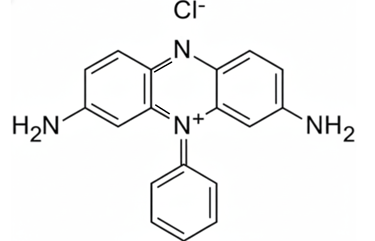
Structure of Diethyl Safranine
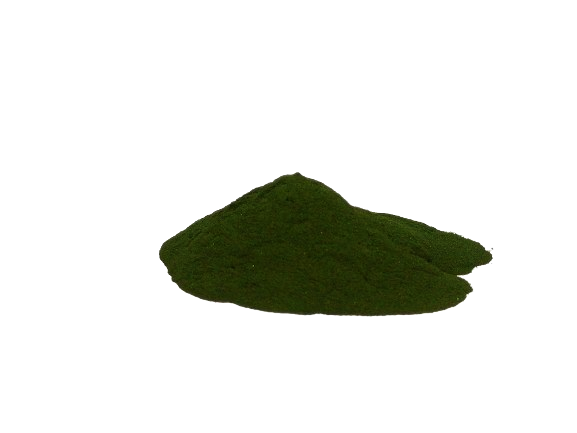
Appearance of Pheno safranin
Molecular Formula
CAS No.
CI No.
IUPAC Name
Synonyms
Molecular Weight
Appearance
Solubility
Dye Content
(Spectrophotometry)
C₁₈H₁₅ClN₄
81‑93‑6
50200
3,7‑diamino‑5phenyl‑5λ⁵‑phenazin‑5‑ylium chloride
Phenazinium, 2- amino-8 (dimethylamino)-10-phenyl- chloride
322.8 g/mol
Red to reddish-purple crystalline powder
Soluble in water
98%
Uses
1. Microbiology (Gram Staining and Bacterial Identification)
2. Histology (Animal Tissue Staining):
Nuclear Staining: The basic nature of phenosafranin allows it to bind to acidic structures like nucleic acids, effectively staining nuclei red. This helps in identifying cell types, nuclear size, and chromatin patterns.
Cytoplasmic and Connective Tissue Visualization: While nuclei are the primary target, cytoplasmic components and extracellular matrix elements may also take up the dye to a lesser degree, providing a contrasting background.
Cartilage and Muscle Tissue Studies: Phenosafranin is particularly useful for highlighting cartilage in tissue sections, staining chondrocytes and extracellular cartilage matrix red, which contrasts with other connective tissues when used in combination with other dyes.
3. Plant Histology (Botanical Studies):
Packing
Export Worthy packing.
Storage Conditions
Store in room temperature
Counterstain in Gram Staining: In the Gram staining procedure, phenosafranin is primarily used as a counterstain after the decolorization step. Gram-positive bacteria retain the crystal violet-iodine complex and appear purple, while Gram-negative bacteria lose the primary stain. Phenosafranin then penetrates these decolorized cells, staining them red or pink. This contrast allows for clear differentiation between Gram-positive and Gram-negative organisms under a microscope.
Endospore Studies: While not the primary stain for endospores, phenosafranin can be used to counterstain vegetative cells red when malachite green is used to stain endospores green, aiding in visual differentiation.
Simple Staining of Bacteria: Phenosafranin can also be used as a simple stain to visualize bacterial morphology, size, and arrangement due to its strong affinity for negatively charged bacterial cell components.
Lignified Tissue Staining: Phenosafranin strongly stains lignin in plant cell walls red, making it useful for studying xylem, sclerenchyma, and other lignified structures.
Differentiation of Cell Types: When used in combination with other stains (like fast green), it provides clear differentiation between lignified and non-lignified tissues, enabling detailed structural studies of stems, roots, and leaves.
Cytological Studies: It can also stain nuclei and other acidic components in plant cells, aiding in cytological analysis.
4. Specialized Uses and Research Applications:
Microbial Morphology Research: Phenosafranin’s strong penetration makes it valuable for studying bacteria with thick or resistant cell walls, including Mycobacterium species, although specialized acid-fast stains are typically preferred.
Educational Microscopy: Due to its bright, contrasting color and ease of use, phenosafranin is widely used in teaching laboratories to help students identify cell structures and understand staining techniques.

:
:
:
:
:
:
:
:
:
Contact
Reach out with questions or service requests
Phone
© 2023-2025, All Rights reserved by AADHAV Remedies Pvt Ltd.