

Methyl-Diethyl Safranin
Description
Functionally, this compound is used as a dye/biochemical reagent — for example as a staining agent or pH indicator in laboratories, as indicated by industrial suppliers listing it among “biological stains, pH indicators, laboratory reagents.” It’s also used under the name Diethyl Safranine / Methyl Diethyl Safranine for applications requiring a phenazinium‑type dye. Because dyes like this often interact with biological/or chemical substrates, handling typically requires caution, though explicit hazard classification details are less consistently reported in public sources for this specific compound.
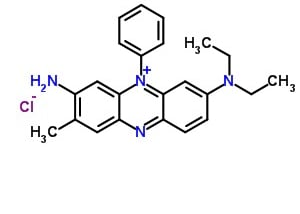
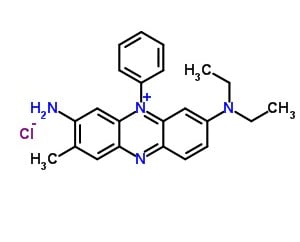
Structure of Methyl-Diethyl Safranin
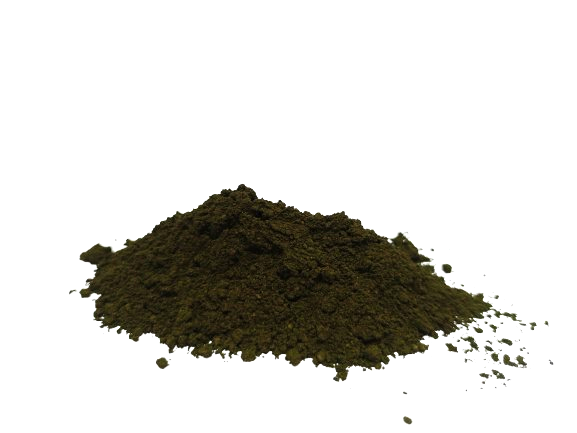
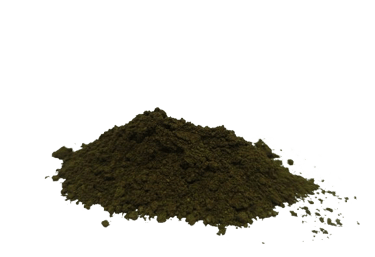
Appearance of Methyl-Diethyl Safranin
Molecular Formula
CAS No.
CI No.
IUPAC Name
Molecular Weight
Appearance
Solubility
Dye Content
(Spectrophotometry)
6378‑81‑0
50216
3-Amino-7-N,N- Diethylamino 2- Methyl-5- Phenyl Phenazinium Chloride
392.93𝑔/𝑚𝑜𝑙
Dark green powder
Soluble in water
98%
Uses
1. Histology / cytology /microscopy staining:
2. Counterstain in bacterial / microbiological techniques (e.g. Gram stain):
For example, Safranin O is widely used to stain Gram‑negative bacteria red when used as a counterstain after primary staining. Since Methyl Diethyl Safranine is a closely related phenazinium dye, similar counterstaining or differential staining applications might be feasible (though I did not find a published protocol explicitly using 6378‑81‑0 as Gram counterstain).
3. Use as a fluorescent or spectrophotometric probe / dye in research:
Packing
Export Worthy packing.
Storage Conditions
Store in room temperature
Phenazinium basic dyes are commonly used to stain cell nuclei, chromosomes, plant tissues (especially lignified tissues), cartilage (acidic proteoglycans), mucin, and mast-cell granules.
According to a chemical‑database summary, 6378‑81‑0 is described as a “broad‑spectrum fluorescent dye,” and “widely used in biological fluorescence microscope imaging, analysis and detection” — e.g., as a fluorescently labeled probe to label and track biomolecules and cellular tissues.
4. Technological / materials‑science applications: study of thin films, dyeing of fibers / textiles:
A research article on “phenazinium dyes” lists dyes of this family (though not always this exact CAS) as probes for studying physicochemical properties of multilayer thin films. Also, an older patent describes using 3‑amino‑7‑diethylamino‑5‑phenylphenazinium chloride (a close structural analog) in dyeing acid‑modified polyester fibers — producing greenish‑blue shades with good light- and wash‑fastness. This suggests that 6378‑81‑0 (or close derivatives) could potentially be adapted for textile / fiber dyeing under appropriate conditions.
5. Potential use as pH indicator or redox indicator (less certain but possible given structure & dye‑family behavior):
A research article on “phenazinium dyes” lists dyes of this family (though not always this exact CAS) as probes for studying physicochemical properties of multilayer thin films. Also, an older patent describes using 3‑amino‑7‑diethylamino‑5‑phenylphenazinium chloride (a close structural analog) in dyeing acid‑modified polyester fibers — producing greenish‑blue shades with good light- and wash‑fastness. This suggests that 6378‑81‑0 (or close derivatives) could potentially be adapted for textile / fiber dyeing under appropriate conditions.
6. Potential use in fluorescence‑based assays / biomolecule labeling / imaging:
As noted, the compound is described (in supplier literature) as a fluorescent dye suitable for biological fluorescence microscopy imaging, detection, and possibly labeling of biomolecules.
:
:
:
:
:
:
:
:
C22H23N4Cl
:
Contact
Reach out with questions or service requests
Phone
© 2023-2025, All Rights reserved by AADHAV Remedies Pvt Ltd.